

Imagine the nonprofit steering the world’s second-largest blockchain quietly laying off a fifth of its workforce, shutting down an entire research division, and losing nine senior leaders in six months, all while the network itself keeps humming along like nothing happened. That’s not a hypothetical. It’s exactly what’s unfolding right now, and most people holding ETH have no idea it’s happening. The Ethereum Foundation Layoffs of June 2026 mark the deepest restructuring in the organization’s history, and understanding why it happened tells you a lot about where Ethereum is actually headed.
What Actually Happened
On June 23, 2026, the Ethereum Foundation eliminated 54 positions, roughly 20% of its approximately 270-person staff, and announced a 40% cut to its 2026 operating budget. Not a gradual trim, a genuinely sweeping overhaul that industry observers are now simply calling the Ethereum Foundation Layoffs. Alongside the layoffs, the Foundation shut down PSE, its Privacy and Scaling Explorations unit, the internal team responsible for zero-knowledge research and cryptography innovation, and reorganized everything remaining into five new domain clusters: protocol, access, user, community, and institutional. The Ethereum Foundation Layoffs didn’t happen in isolation either. That timing landed on top of a rough stretch of leadership turnover, at least nine senior figures departed the organization since January 2026, including both co-executive directors. Whatever’s going on here, it’s clearly bigger than a routine budget adjustment.
The Real Reason: A Deliberate Shift, Not a Panic Move
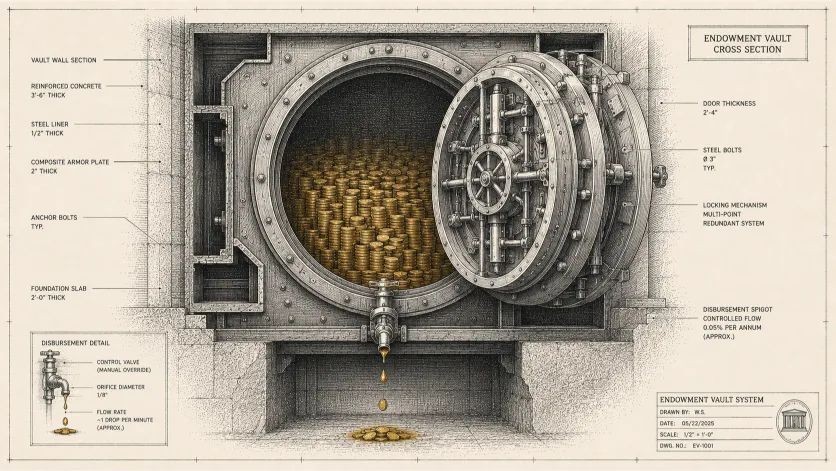
Here’s where the story gets genuinely more interesting than “crypto nonprofit runs out of money.” Vitalik Buterin framed the cuts as a deliberate strategic pivot toward what’s called an endowment model, where the Foundation spends only investment returns on its treasury rather than steadily drawing down principal. Annual spending, which had been running around 15% of total treasury assets, is targeted to fall toward roughly 5% by 2030. The 40% cut in 2026 represents the largest single-year step toward that new baseline. Worth taking that framing seriously rather than dismissing it as spin. An endowment model, spending only returns rather than eating into the core fund, is mathematically viable indefinitely, the same structural logic major universities and large charitable foundations use to fund operations for centuries rather than years. Buterin didn’t pretend the transition would be painless either, he explicitly rejected the idea that reductions this size could happen without real, meaningful losses.
Why the Money Actually Ran Short
Separate from the strategic endowment shift, there’s a more immediate, practical funding gap driving urgency here. The Foundation’s four-year Client Incentive Program, which funded the various independent teams building and maintaining Ethereum’s core client software, quietly expired in April 2026 with no announced replacement. That program mattered more than its low profile might suggest. Trent Van Epps, who coordinated core development at the Foundation from 2021 until April 2026, estimated that maintaining Ethereum’s network of more than ten independent client teams requires roughly $30 million annually. With that funding stream gone and nothing yet built to replace it, Van Epps warned the core development ecosystem could face a genuine structural funding crisis within three to nine months. The Ethereum Foundation Layoffs, in that light, look less like belt-tightening for its own sake and more like an organization trying to get ahead of a funding cliff it saw coming.
What Happens to the Privacy and ZK Research?
The PSE shutdown deserves its own honest look, since it’s arguably the most consequential single decision buried inside this broader restructuring. PSE had served for years as Ethereum’s internal incubator for zero-knowledge proof research, privacy technology, and identity systems, foundational work underpinning a huge share of Ethereum’s long-term scaling and privacy roadmap. Buterin has maintained that winding down PSE as a standalone unit doesn’t necessarily mean fewer people working on zero-knowledge technology broadly, one of the more nuanced claims to come out of the Ethereum Foundation Layoffs, engineers are expected to shift from open-ended exploratory research toward implementing ZK-based privacy and scaling features directly inside Ethereum’s protocol layer instead. Skeptics see it differently. With PSE’s applied-cryptography execution capacity now disbanded rather than reassigned wholesale, the honest open question isn’t whether Ethereum’s privacy roadmap remains theoretically intact on paper, it does, but whether the actual engineering capacity to build it still exists anywhere close to the scale PSE once provided.
Enter EthLabs: Competition or Cushion?
In a genuinely striking bit of timing, five former Ethereum Foundation researchers launched an independent organization called EthLabs the day before the layoffs were officially announced, backed by Ethereum co-founder Joe Lubin, BitMine, SharpLink, and more than 50 other partners. On the surface, EthLabs looks like exactly the kind of external capacity that could absorb some of the research work PSE used to handle. Reality’s messier than that clean narrative, though. EthLabs’ own backers have publicly acknowledged the new lab will actually compete with the Foundation for engineering talent and research priorities, not simply serve as an additive helper filling gaps. That’s a notable admission, and it complicates any tidy story where the Ethereum Foundation Layoffs get quietly offset by a friendly outside organization stepping in to pick up the slack. Instead, Ethereum’s core development ecosystem now has two organizations with overlapping mandates and, potentially, competing claims on a shrinking pool of specialized talent.

How the Market Actually Reacted
Given how dramatic this all sounds on paper, the market’s response was surprisingly muted. Ether traded around $1,660 as the announcement landed, without the kind of sharp sell-off a major leadership shakeup might once have triggered in a smaller, less established network. Analysts pointed to Ethereum’s large, genuinely decentralized developer base as the reason, no single organization’s internal turmoil, even one as central as the Foundation, carries the same market-moving weight it might have in Ethereum’s earlier, more centralized years. That resilience cuts both ways, worth being clear-eyed about it. It’s a genuine sign of ecosystem maturity that Ethereum doesn’t live or die by Foundation headcount. It’s also possible the market simply hasn’t fully priced in the longer-term development risk yet, funding gaps and thinned research capacity tend to show up in roadmap delays and slower feature delivery months or years down the line, not in a single afternoon’s price action. Whether the Ethereum Foundation Layoffs eventually register as a market-moving event or fade into a footnote likely depends on how visible those downstream effects become.
Who Actually Wins and Loses From This Restructuring
Worth thinking through who benefits and who takes on more risk as a result of the Ethereum Foundation Layoffs, since the effects genuinely aren’t evenly distributed. Independent client teams, the small, specialized groups actually writing and maintaining Ethereum’s core software, arguably face the sharpest immediate risk. With the Client Incentive Program gone and no clean replacement funding mechanism yet built, teams that relied heavily on Foundation grants now need to find alternative funding, whether from EthLabs, corporate sponsors, or their own runway, and fast. Corporate players positioned to fill funding gaps arguably stand to gain influence. Companies like BitMine, already deeply invested in Ethereum through massive treasury holdings, backing an organization like EthLabs isn’t pure altruism, it’s a genuine opportunity to shape research priorities and protocol direction in ways that benefit large ETH holders specifically. That’s not inherently bad, but it does mark a real shift in who gets a seat at the table when core research funding decisions get made, moving somewhat away from a single, relatively neutral nonprofit and toward a more fragmented landscape of competing, interest-aligned funders.
What This Actually Means Going Forward
The Ethereum Foundation Layoffs represent a genuine bet that a leaner, more narrowly focused organization can sustain Ethereum’s core development indefinitely without depending on favorable market conditions or a shrinking treasury. The Foundation’s new priorities have been distilled into a memorable shorthand, CROPS, censorship resistance, openness, privacy, security, and Layer 1 scaling, a tighter mandate than the sprawling, open-ended research culture the organization was known for previously. Whether that bet pays off depends heavily on whether the broader ecosystem, EthLabs, independent client teams, corporate backers like BitMine, can actually fill the funding and research gaps the Foundation is deliberately stepping back from. Anyone wanting to understand Ethereum’s actual technical roadmap and how client diversity keeps the network secure can dig into Ethereum.org’s nodes and clients documentation, which explains exactly why maintaining multiple independent client teams matters so much for the network’s resilience. For readers who want to follow how this restructuring plays out in real time, The Defiant’s ongoing coverage has stayed closely on top of the Foundation’s evolving structure and funding situation since the announcement first broke.
The Bottom Line
The Ethereum Foundation Layoffs aren’t a sign that Ethereum itself is failing, the network keeps processing transactions, staking keeps generating yield, and institutional adoption keeps climbing regardless of what’s happening inside the Foundation’s org chart. What they do represent is a genuine, high-stakes transition, from a well-funded research organization spending freely to a leaner endowment model built to last decades, happening at the exact same time a real funding gap threatens the teams maintaining Ethereum’s core software. Nine senior departures, a shuttered privacy research unit, and a brand-new competing lab all landing within months of each other makes this one of the more consequential, least-discussed stories in Ethereum right now. For more coverage on the people and institutions actually building Ethereum’s future, keep exploring the archives over at Ethpublic.com.