

Picture the world’s largest asset manager, the same firm that manages retirement money for schoolteachers and pension funds across the globe, quietly hitching its wagon to a blockchain that started life as a scrappy side project back in 2015.
BlackRock and Ethereum
BlackRock and Ethereum have become one of the more surprising partnerships in modern finance, and honestly, the story is a lot more interesting than most headlines let on. Grab a coffee, because we’re about to break down why a Wall Street titan cares so much about a network that most people still don’t fully understand.
How Did BlackRock and Ethereum Even Cross Paths?
Rewind a few years and the idea of BlackRock touching crypto seemed almost laughable. Larry Fink, the CEO, once dismissed bitcoin as a tool for money laundering. Fast forward, and the tone flipped completely. BlackRock filed for a spot bitcoin ETF in 2023, and once that door opened, an Ethereum product felt inevitable. Regulatory approval finally landed, and the connection between BlackRock and Ethereum moved from rumor to reality almost overnight.
Institutional money doesn’t move on a whim. Analysts had to be convinced that Ethereum wasn’t just a speculative token but actual infrastructure, the kind that powers stablecoins, tokenized funds, and decentralized apps. Once that case was made internally, the wheels started turning fast.
Meet ETHA: The Fund That Started It All
ETHA, officially the iShares Ethereum Trust ETF, is the flagship product tying BlackRock and Ethereum together in the eyes of everyday investors. Launched to give people spot exposure to ether without the headache of managing a crypto wallet or worrying about lost private keys, ETHA trades on Nasdaq just like a stock. Buy a share through a normal brokerage account, and you’re getting price exposure to the second-largest cryptocurrency on the planet.
By mid-2026, ETHA had grown into a multi-billion dollar fund, at times holding upward of $7 billion in assets, making it one of the largest ether-based vehicles in the United States. A 0.25% annual sponsor fee applies, which is pretty standard for this type of product. Notably, BlackRock filed for a reverse stock split on ETHA in August 2026, a move meant to tighten bid-ask spreads and make trading a bit smoother for larger institutional orders.
Curious readers can dig into the official fund details straight from the source over at BlackRock’s ETHA product page.

Then Came ETHB: Staking Enters the Chat
Just holding ether wasn’t enough for some investors. Ethereum runs on a proof-of-stake system, meaning coin holders can lock up their tokens to help secure the network and earn rewards in return. Seeing the demand for yield, BlackRock launched a second product in March 2026: the iShares Staked Ethereum Trust ETF, ticker ETHB. Unlike its older sibling, ETHB actually stakes a large chunk of its holdings, typically somewhere between 70% and 95%, through Coinbase Prime. Roughly 82% of the gross staking rewards get passed along to shareholders monthly. That’s a meaningful shift. Suddenly, the relationship between BlackRock and Ethereum wasn’t just about price speculation anymore, it became about generating real, ongoing yield.
Why Do Institutions Actually Care?
Big money doesn’t chase hype for its own sake, at least not usually. Several genuine reasons explain why the bond between BlackRock and Ethereum keeps strengthening.
- Regulated access matters. Financial advisors can now offer ether exposure inside retirement accounts and brokerage platforms without touching an unregulated exchange.
- Ethereum underpins a growing share of tokenized real-world assets, and BlackRock’s own BUIDL fund actually runs on the Ethereum network itself, which says a lot about internal confidence.
- Staking yield gives institutional clients something bonds used to offer: a steady, predictable-ish return layered on top of price appreciation.
Jay Jacobs, BlackRock’s U.S. head of equity ETFs, described the strategy as being about investor choice rather than picking winners between products. Fair point. Not everyone wants the same flavor of exposure, and giving clients options tends to keep them from wandering off to a competitor.
What Makes This Different From Just Owning ETH Directly?
Diehard crypto folks will tell you, correctly, that owning ether directly through your own wallet gives full control and skips management fees entirely. Fair enough. But plenty of investors, especially larger institutions bound by compliance rules, simply cannot or will not custody crypto themselves. That’s the gap BlackRock and Ethereum products fill. A pension fund manager can add ETHA to a portfolio the same way they’d add a bond ETF, no cold wallet required, no seed phrase to memorize, no sleepless nights wondering if a hardware wallet got left on a train. Convenience comes at a cost though. Expense ratios eat into returns over time, and staking through a fund means giving up direct control over validator choices. Trade-offs exist everywhere in finance, and this is no exception.
Risks Worth Knowing About
Nothing here is risk-free, obviously. Ether’s price swings hard, sometimes dramatically within a single trading day. Regulatory attitudes can shift again too; what’s approved today isn’t guaranteed to stay that way forever. Staking itself carries slashing risk, where validators can lose a portion of staked funds for network violations, though funds like ETHB try to mitigate that through professional custodians. Reverse stock splits, like the one ETHA underwent, don’t change the actual value of anyone’s holdings, but they can confuse newer investors who see their share count drop overnight. Worth reading the fine print before assuming anything went wrong.
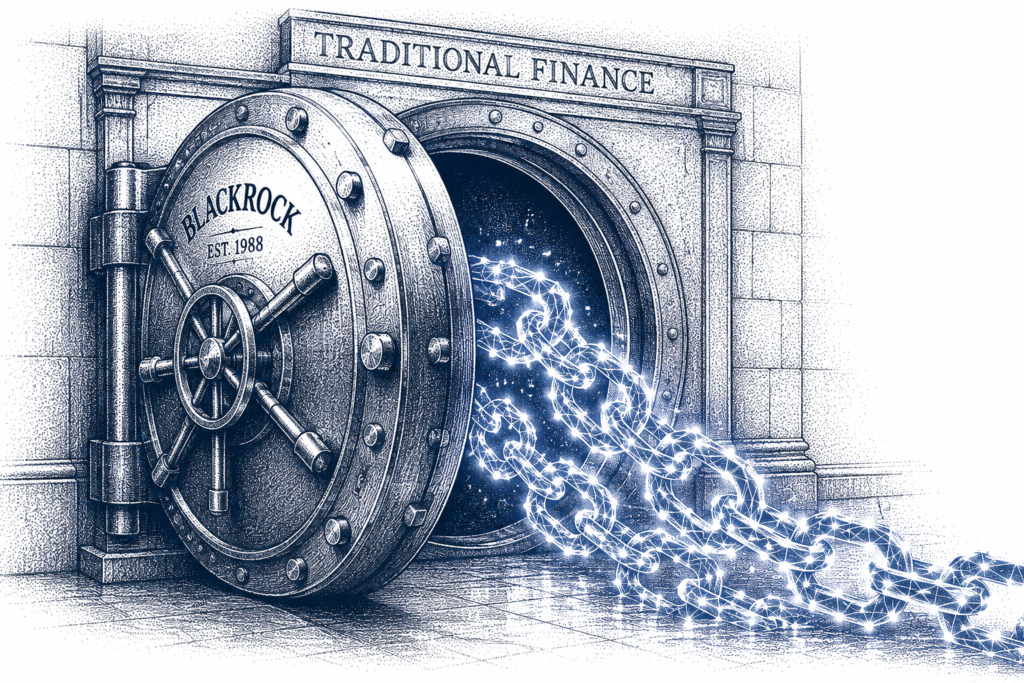
What’s Next for BlackRock and Ethereum?
Momentum rarely slows down once a giant like BlackRock commits real capital to a thesis. Expect more product variations down the line, possibly combining staking with options strategies, or bundling ether exposure alongside other digital assets in diversified baskets. Competitors like Fidelity and Grayscale aren’t sitting still either, so the pressure to innovate keeps building. Tokenization of real-world assets seems to be the bigger long-term story. Money market funds, bonds, even real estate could eventually settle on Ethereum’s rails, and BlackRock has already dipped a toe in with BUIDL. If that trend accelerates, the relationship between BlackRock and Ethereum might end up being remembered less for ETFs and more for reshaping how traditional finance actually settles transactions.
Final Thoughts
Wild how far things have come. A firm once openly skeptical of crypto now runs some of the largest ether investment vehicles on the market, and everyday investors get to ride along without touching a single line of code. Whether ETHA, ETHB, or whatever comes next fits into a specific portfolio depends on individual goals, risk tolerance, and how much someone actually trusts Wall Street to handle their crypto exposure responsibly. For those wanting to understand the underlying technology powering all of this rather than just the investment wrapper, the official Ethereum.org site remains the best starting point. Bottom line: keep watching this space, because BlackRock and Ethereum together are quietly rewriting a few chapters of how institutional finance treats digital assets, and that story is nowhere close to finished. For deeper dives into everything happening across the Ethereum ecosystem, head over to Ethpublic.com.