
BlackRock, the world’s largest asset manager, quietly launched a staking-enabled Ethereum ETF in early 2026, and it’s already reshaping how Wall Street thinks about crypto yield. The product is called ETHB, and its arrival answers a question that’s been circling institutional finance for years: can a regulated fund actually pay investors real staking rewards, not just track ETH’s price? Let’s break down what BlackRock built, how it works, and why it matters more than the modest headline numbers might suggest.
Meet ETHB: BlackRock’s Staking-Enabled Ethereum Fund
The product is called ETHB, officially the iShares Staked Ethereum Trust ETF, and it began trading on Nasdaq on March 12, 2026, marking the firm’s first crypto fund to actually incorporate staking. That last detail matters more than it sounds. BlackRock already had two crypto ETFs before this, IBIT for Bitcoin and ETHA for spot Ethereum, but neither one generated yield. ETHB is the first Ethereum Staking ETF from BlackRock specifically designed to pay investors while they hold, not just track price. The fund debuted with $107 million in seed assets, $15.5 million in first-day trading volume, and roughly 80% of its ETH already staked on-chain from day one. Not a blockbuster launch by IBIT standards, but a genuinely functional Ethereum Staking ETF clearing regulatory hurdles that seemed stuck in limbo for years.
How ETHB Actually Works Under the Hood
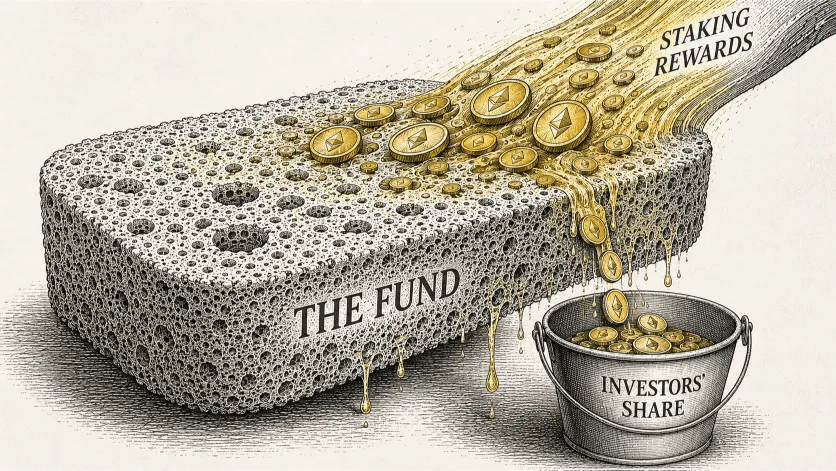
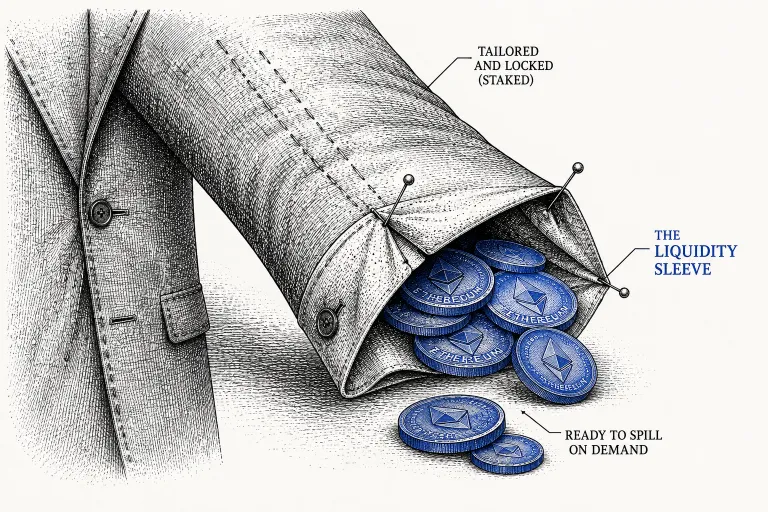
Here’s where things get genuinely interesting for anyone who’s followed crypto’s slow crawl toward institutional legitimacy. BlackRock intends to stake between 70% and 95% of the Ether held by the trust, maintaining what it calls a “Liquidity Sleeve,” 5-30% kept unstaked specifically to handle investor redemptions without disruption. That’s a smart structural choice, honestly. Staking locks capital up for a period, Ethereum’s protocol has exit queue delays built in, so a fund that staked 100% of its holdings would risk getting stuck if too many investors wanted their money back at once. Keeping a liquid buffer solves that problem elegantly, and it’s exactly the kind of engineering-under-the-hood work that separates a genuinely investable Ethereum Staking ETF from a rushed, poorly-built product.On the yield side: investors receive approximately 82% of gross staking rewards, while the remaining 18% gets split between BlackRock and Coinbase, which serves as the fund’s prime execution agent handling custody and staking operations. Gross staking yield runs around 3.1-3.3% annualized, working out to roughly 2.6% net for investors after fees. That yield structure is fairly typical for how an Ethereum Staking ETF gets built, a sponsor fee plus an execution-agent cut carved out of gross rewards before the investor sees a dime.
Why Now, Not Two Years Ago?
Good question, and the answer is genuinely interesting rather than just “regulators finally got around to it.” Two specific things had to happen first. The GENIUS Act, the federal stablecoin framework passed in July 2025, cleared regulatory runway for yield-generating crypto products broadly. Separately, former SEC Chair Gary Gensler’s departure mattered enormously, since Gensler had specifically instructed firms to strip staking components out of ETF filings during his tenure. Under new leadership, the calculus shifted. Under Chair Paul Atkins, the SEC approved ETHB’s structure without objection, a genuinely notable reversal from the previous administration’s posture. Worth remembering that context next time someone tells you regulation never actually changes, sometimes it does, and fast.
Was BlackRock Actually First?
Nope, and it’s worth being honest about that instead of pretending BlackRock invented the category. ETHB isn’t the first staked Ethereum product on the market, Grayscale launched before it, and the REX-Osprey ETH + Staking ETF also preceded BlackRock’s entry. So what actually changes with BlackRock’s version? Scale and legitimacy, mostly. What changes with ETHB is the scale of distribution and the institutional credibility behind it, and that distinction matters enormously. Grayscale proved the concept worked technically and legally. BlackRock, managing trillions across its full product lineup, proves it’s something the biggest financial institutions on the planet are willing to put their name on. That’s the difference between “this is technically possible” and “this is now mainstream.”
The Competitive Landscape Is Heating Up Fast
BlackRock won’t be alone for long, and honestly, it’s barely alone right now. Q2 2026 is expected to bring additional Ethereum Staking ETF approvals from Fidelity, Franklin Templeton, Invesco, 21Shares, and VanEck, essentially every major asset manager racing to build the same product simultaneously. When names that size all move into the same category within months of each other, that’s not speculation anymore, that’s a genuine land grab for institutional crypto market share. Coinbase’s involvement is worth flagging too, since it’s not just BlackRock acting alone here. Coinbase serves as the primary custodian and staking operator for all three of BlackRock’s crypto ETFs, and Coinbase’s CEO framed the launch as making “crypto more accessible through familiar, trusted platforms.” Boring, unglamorous infrastructure partnerships like this are honestly doing more heavy lifting for crypto’s mainstream adoption than any single price rally ever could.
What About the Risks? Let’s Be Honest
A 1.9-2.2% net yield sounds nice until you compare it against boring, safe alternatives. A 1.9% net yield is genuinely modest, ten-year treasuries currently pay more. Nobody should buy an Ethereum Staking ETF purely chasing yield, treasuries or dividend-paying stock funds might make more sense for pure income seekers. Staking also carries slashing risk, if a validator misbehaves on the network, a portion of staked ETH can face a penalty. That’s a real, disclosed risk baked into how Proof of Stake security works, not a hidden gotcha, but worth understanding before assuming an Ethereum Staking ETF behaves like a plain bond fund. Different asset, different risk profile, different reasons to hold it. An industry voice put the honest framing well: Kevin Feig, founder of Walk You To Wealth, noted that much like he wouldn’t recommend investing in a stock only because of the dividend, he wouldn’t invest in ETH or Solana simply because of staking rewards, but if someone already believes in the underlying digital asset, staking now offers a genuine income opportunity on top of that conviction. That’s a fair, level-headed way to think about any Ethereum Staking ETF on the market right now.
Where Ethereum’s Own Infrastructure Fits In
None of this works without the underlying protocol actually supporting it cleanly. Ethereum’s shift to Proof of Stake back in 2022 is the entire technical foundation making products like ETHB possible in the first place, before that transition, there simply wasn’t a native staking mechanism for a fund like this to plug into. Anyone wanting to understand the actual mechanics validators use to earn and distribute rewards can dig into Ethereum.org’s staking overview, which breaks down the technical fundamentals regardless of whether you’re buying an ETF or staking directly yourself. For anyone wanting to track ETHB’s actual on-chain holdings in real time rather than relying on quarterly fund reports, CoinDesk’s ongoing coverage of institutional crypto products stays reliably current as this space keeps evolving week to week.
What This Means If You’re Already Holding ETH
If you already own ETH directly, staked or unstaked, ETHB doesn’t really change anything for you personally, it’s not a wrapper you need to migrate into. What it does change is the broader market backdrop you’re operating in. When BlackRock stakes a meaningful chunk of ETH through its Liquidity Sleeve structure, that’s real supply getting locked up, joining the roughly 30%+ of total ETH already committed to staking across the network. More institutional staking demand, layered on top of retail and crypto-native staking that already existed, tightens the liquid supply further, a dynamic worth watching if you’re tracking Ethereum’s broader supply and demand picture. There’s also a signaling effect that’s honestly hard to quantify but real nonetheless. When the world’s largest asset manager builds staking infrastructure this carefully, complete with liquidity buffers, custody partnerships, and monthly distribution mechanics, it tells every other institution watching from the sidelines that the operational playbook now exists and works. Expect that to accelerate the wave of copycat products landing throughout 2026 rather than slow it down.
How ETHB Compares to Buying and Staking ETH Yourself
Worth asking honestly: why buy a fund like this through a brokerage instead of just staking ETH directly yourself? A few real tradeoffs exist on both sides between a hands-on approach and an Ethereum Staking ETF. Direct staking, either running your own validator or using a liquid staking protocol, generally captures a larger share of gross rewards since there’s no fund sponsor fee or execution agent cut eating into the yield. Direct staking also keeps you in full custody of your own assets rather than trusting a third party. An Ethereum staking product like ETHB trades that efficiency for convenience and familiarity. No wallet setup, no validator technical knowledge, no direct exposure to smart contract risk on a staking protocol, just a ticker symbol inside an account you probably already have. For a huge segment of traditional investors, retirees, financial advisors managing client portfolios, anyone who simply doesn’t want to touch crypto infrastructure directly, that tradeoff makes complete sense. The fee difference is the price of accessibility, and clearly a meaningful number of investors think that price is worth paying.

The Bottom Line
ETHB launched March 12, 2026, already staking roughly 80% of its holdings while paying investors monthly. It’s not the first product of its kind, Grayscale beat BlackRock to market, but BlackRock’s version brings the scale, distribution, and institutional trust that turns a niche product into a mainstream financial category. A modest 1.9-2.2% net yield won’t replace your bond allocation, and slashing risk is real, but as a genuine staking-enabled fund built by the world’s largest asset manager, ETHB represents exactly the kind of infrastructure milestone that quietly reshapes how an entire asset class gets treated by Wall Street. For more coverage on how institutional finance keeps reshaping the Ethereum ecosystem, keep exploring the archives over at Ethpublic.com.