

Somewhere right now, an AI agent is buying a fraction of a cent’s worth of compute power from another AI agent, and neither one asked a human for permission. No credit card popup, no “confirm purchase” button, no human anywhere in the loop. That’s not a hypothetical scenario dreamed up by a futurist. It’s already happening millions of times a day, and it’s why Machine-to-Machine Payments have quietly become one of the most consequential shifts in finance nobody outside crypto circles is talking about yet. Buckle up, because this one’s bigger than it sounds.
Wait, What Exactly Are Machine-to-Machine Payments?
Strip away the jargon and the concept is refreshingly simple. Machine-to-Machine Payments happen when one autonomous software system, usually an AI agent, pays another system directly for a service, data, or access, without a human clicking “buy” anywhere in the process. Think an AI agent paying for an API call, purchasing a slice of cloud compute, or settling a bill for a data feed it needs to complete a task. Traditional payment rails were never built for this. Credit cards assume a human is present to authorize a charge. Bank transfers assume business hours and settlement windows measured in days. Agent-driven transactions operate at a completely different speed and scale, sometimes thousands of transactions per minute, often worth fractions of a penny each. When an AI agent must pay another AI agent in milliseconds for a task worth fractions of a cent, credit cards and bank transfers fall short. The old rails simply can’t keep up.
The Numbers Are Honestly Kind of Staggering
Skeptics love to wave this off as niche crypto-bro speculation. The data says otherwise, and it says it loudly. AI agents enabled $73 million in machine-to-machine settlements across 176 million transactions between May 2025 and April 2026, according to a study by crypto investment firm Keyrock in partnership with Coinbase and the Tempo blockchain. A Keyrock researcher put it plainly: machine-to-machine payments went from concept to a developed ecosystem in just twelve months. Scale that out and the picture gets wilder. By the end of Q1 this year, more than 104,000 AI agents were registered across fifteen-plus directories, with the average transaction size sitting around just $0.31. That’s not a rounding error, that’s an entirely new category of economic activity, one built on volume and speed rather than the big-ticket transactions traditional finance was designed around.
Why Stablecoins Became the Default Rail
Here’s where things get genuinely interesting for anyone who follows crypto. Agent-driven commerce needed a settlement layer that could handle instant, low-cost, high-frequency transfers, and stablecoins turned out to be exactly that. Nearly 98% of machine-to-machine settlements were conducted in Circle’s USDC, which tells you almost everything you need to know about which asset won this particular race. Why USDC specifically, and not some flashier token? Reliability, mostly. Circle’s regular transparency reporting and US banking footprint give processors and merchants the compliance comfort they need to actually build on top of it. Almost every agent-payment surface launched in 2025 and 2026 defaults to USDC because Circle’s monthly transparency reports and US-based banking footprint align with the compliance profile that processors and merchants accept. Boring, dependable infrastructure winning out over hype is honestly a pretty refreshing story in crypto.
The Big Players Are Already Building the Rails
This isn’t some fringe experiment running on a hobbyist’s testnet anymore. The biggest names in payments have jumped in with both feet. Mastercard launched Agent Pay for Machines, a platform letting AI agents and connected devices make autonomous microtransactions using cards, bank accounts, and regulated stablecoins, with partners including Coinbase, RippleX, and Stripe. Mastercard’s own framing envisions a future where agents transact with each other continuously at high velocity, executing chains of transactions including microtransactions that could unlock a massive new wave of business models. Mastercard isn’t operating alone in this race either. Other companies building AI payment networks include Coinbase, behind the x402 protocol, Stripe, which partnered with blockchain project Tempo on what they call the Machine Payments Protocol, and Google, which released its own standard. When Visa, Mastercard, Stripe, Google, and Coinbase are all racing to build the same category of infrastructure simultaneously, that’s not speculation anymore, that’s a land grab for real market share. Even Amazon’s gotten in on it. Amazon Web Services introduced Amazon Bedrock AgentCore Payments, developed alongside Coinbase and Stripe, enabling AI agents to conduct payments with USDC, with settlements occurring on Base and Solana networks. Machine-to-Machine Payments have officially graduated from crypto-native experiment to enterprise infrastructure priority.

What This Actually Looks Like in Practice
The workloads breaking down here fall into a few clear buckets, and understanding them helps explain why Machine-to-Machine Payments needed such different infrastructure than everything that came before. Machine-to-machine flows pay sub-cent amounts for inference calls, data feeds, and compute, with pricing sometimes as granular as $0.01 per API request. Separately, larger B2B agent flows handle invoice payments and subscription renewals in the hundreds to thousands of dollars range, closer to traditional payment volumes but still fully automated. Picture an AI agent running a small online storefront entirely on its own. That agent can register a domain, build a storefront, manage inventory, and handle customer service entirely on its own, but to do any of that, it needs to pay for API access, cloud compute, data feeds, and other agents’ services. Every one of those payments needs to clear in milliseconds, cost almost nothing to process, and require zero human sign-off. That’s the world this new category of agent-driven commerce is quietly being built to support.
Okay, But What Could Go Wrong?
Not everything about this story is smooth sailing, and pretending otherwise would be dishonest. The heavy reliance on a single stablecoin issuer is a real structural concern worth taking seriously. The dependence on USDC creates a single-issuer concentration risk that amplifies any regulatory or operational problems Circle might face, a genuine structural vulnerability in a sector that’s otherwise growing fast. Put nearly all your eggs in one basket, and that basket better never wobble. Regulation is also playing catch-up, and not gracefully. MiCA in Europe, the US GENIUS Act, and the EU AI Act are all expected to take effect around mid-2026, yet none of them directly address autonomous machine-to-machine transactions, questions of agent liability, or who’s responsible when an agent makes a bad financial decision. That’s a genuinely thorny gap. If an AI agent overspends, gets scammed by another malicious agent, or makes a bad trade autonomously, the legal framework for sorting out who’s on the hook simply doesn’t exist yet in most jurisdictions. Adoption also isn’t universal by any stretch. Real-world adoption remains limited since most companies still rely on centralized APIs and traditional payment systems rather than agentic payment rails, according to industry analysts. Growth here is happening fast from a small base, not sweeping across the entire economy overnight.
Where Ethereum Fits Into This Story
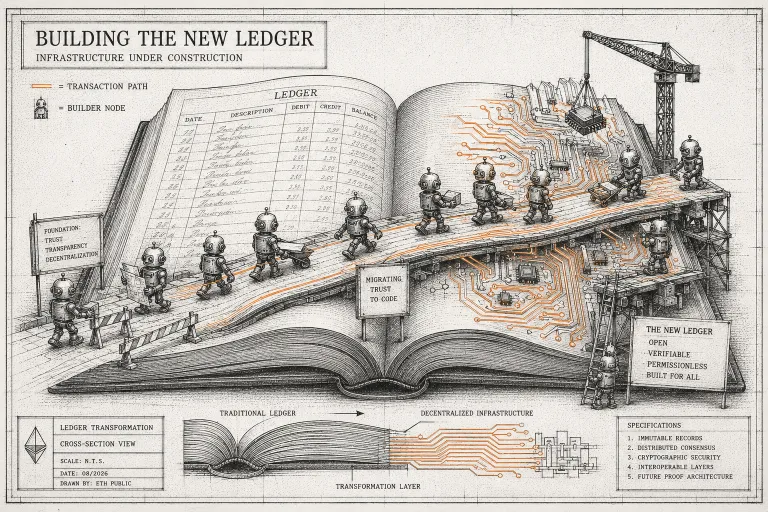
A meaningful chunk of this activity runs directly on Ethereum and its Layer 2 ecosystem, leaning on smart contracts to automate the logic behind agent-to-agent settlements without requiring a trusted middleman. Programmable money needs a programmable settlement layer, and Ethereum’s smart contract infrastructure is exactly the kind of foundation autonomous, rules-based Machine-to-Machine Payments require. Anyone wanting to understand the technical building blocks powering this shift can dig into Ethereum.org’s smart contracts documentation, which breaks down how automated, trustless transactions actually get executed on-chain. Layer 2 scaling matters enormously here too. Sub-cent transactions only make economic sense when the network fee doesn’t dwarf the payment itself, and that’s precisely the problem Ethereum’s scaling roadmap has spent years solving. Cheap, fast settlement isn’t a nice-to-have for Machine-to-Machine Payments, it’s the entire prerequisite that makes the whole model economically viable in the first place.
What’s Coming Next?
Expect this space to keep accelerating rather than plateauing. Industry analysts project stablecoin supply will grow another 56% in 2026, reaching roughly $420 billion, with agentic payments and machine-to-machine payment flows cited as key growth drivers alongside cross-border business payments and consumer remittances. That’s a serious number attached to a still-young category. The bigger structural shift might be even more interesting than the dollar figures. If autonomous agents eventually outnumber human transactors, as many industry leaders now predict, the total transaction volume flowing through crypto rails could dwarf current levels. Sit with that for a second. Not “AI helps humans transact faster,” but AI agents genuinely becoming the majority of economic actors moving value around the internet. Wild to type out, honestly, but the infrastructure being built right now suggests the people closest to this technology take that scenario seriously.
The Bottom Line
Machine-to-Machine Payments have moved from theoretical crypto experiment to genuine financial infrastructure in roughly eighteen months, and the biggest names in payments, Mastercard, Visa, Stripe, Coinbase, Amazon, are all building for the same future simultaneously. Stablecoins, USDC in particular, became the backbone almost by default, offering the speed and reliability autonomous agents actually need. Real risks remain, regulatory gaps, single-issuer concentration, and adoption that’s still early despite the impressive growth numbers. But the direction of travel is unmistakable. Readers wanting to explore the technical foundations underpinning this shift should check out Ethereum.org’s developer resources, and anyone tracking the broader agentic payments landscape might find CoinDesk’s ongoing coverage useful for staying current as the space keeps evolving fast.
For more breakdowns on how AI and blockchain infrastructure are reshaping the future of money, keep exploring the archives over at Ethpublic.com.