
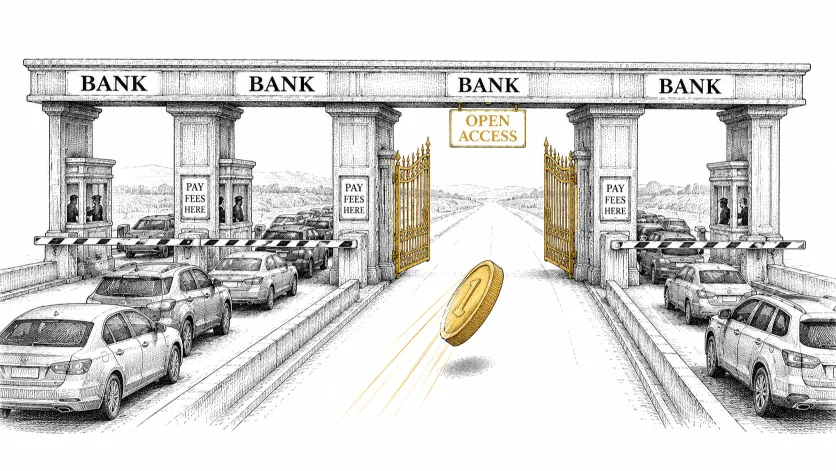
A freelance designer in Lagos gets paid by a client in Berlin, and the money lands in her wallet in about four seconds. No wire transfer fees eating fifteen percent of the invoice. No three-day waiting period while two banks argue over correspondent relationships. Just money, moving. That tiny, unglamorous transaction happens millions of times a day now, and it’s a big reason Stablecoins Are Changing Global Finance in ways most people haven’t fully clocked yet. Let’s dig into why.
Wait, What’s a Stablecoin Again?
Quick refresher for anyone who’s been half-listening to crypto Twitter. A stablecoin is a digital token pegged to a stable asset, usually the US dollar, designed to hold its value instead of bouncing around like Bitcoin on a bad day. Tether (USDT) and USD Coin (USDC) dominate the space, each backed, in theory and increasingly in regulated practice, by cash and cash-equivalent reserves sitting somewhere in the traditional banking system. Sounds boring compared to flashy NFTs or meme coins, sure. But boring is exactly the point. Stablecoins Are Changing Global Finance precisely because they combine the speed and openness of blockchain rails with the predictability people actually want from money. Nobody wants their grocery budget to swing twenty percent overnight.
The Numbers Are Getting Hard to Ignore
Skeptics used to wave stablecoins off as a niche trading tool, something crypto natives used to park funds between volatile bets. That framing hasn’t aged well. Total stablecoin market capitalization moved above $300 billion in early 2026, with annual transfer volume reaching tens of trillions of dollars. The global stablecoin market reached $317 billion in market capitalization as of April 2026, growing over 50% in a single year, with adjusted transaction volume hitting $28 trillion in real economic activity in 2025. Those aren’t rounding errors. That’s a genuine shift in how value moves around the planet, and it explains why Stablecoins Are Changing Global Finance conversations have migrated from crypto forums into central bank policy papers and Fortune 500 boardrooms. Asia already stands as the largest stablecoin-flow region, handling $12.5 trillion in 2025 alone, a 67% jump year over year. Momentum like that doesn’t happen by accident.
Why Cross-Border Payments Are Ground Zero
Traditional international payments rely on a tangled web of correspondent banks, each taking a cut and adding delay. Anyone who’s sent money to family abroad knows the drill: fees that feel almost punitive, exchange rates that mysteriously favor the bank, and a wait time measured in days rather than seconds. Stablecoins sidestep most of that mess entirely. Stablecoins have become a practical tool for moving liquidity across borders faster and under tighter control, with leading enterprises using stablecoin funding alongside global payout networks to reach users, optimize treasury, and scale into new markets with less friction. Freelancers, remote workers, and small businesses in regions with unreliable banking infrastructure are often the first to feel the difference. Once someone experiences a four-second, near-free international transfer, going back to a three-day wire feels almost medieval. In Nigeria, households and small businesses increasingly rely on smartphones, digital wallets, and US dollar-pegged stablecoins for remittances and cross-border payments, according to IMF analysis. That’s not a hypothetical use case dreamed up by a whitepaper. That’s real people solving a real problem with the tools available to them, and it’s a core reason Stablecoins Are Changing Global Finance rather than just theoretically threatening to someday.
Regulators Finally Showed Up, and That Changed Everything
For years, institutional money stayed on the sidelines because nobody could say for certain what the legal rules actually were. Regulatory clarity turned out to be the missing ingredient, not blockchain speed or clever tokenomics. The GENIUS Act, MiCA, and equivalent statutes in Singapore, Hong Kong, and Japan have set a clear standard requiring licensed issuers, fully backed reserves, and guaranteed redemption rights. Once that legal fog lifted, banks and payment networks stopped treating stablecoins as a curiosity. Ninety percent of financial institutions surveyed reported taking some action in the stablecoin market, whether planning, running pilots, or moving into live deployments. Bank of America’s CEO went on record calling stablecoin entry a matter of “when, not if,” which is a remarkable sentence coming from an institution that spent a decade dismissing crypto outright. Watching legacy finance pivot this hard is honestly a little wild if you’ve followed the space since the early days.
It’s Not Just Payments Anymore
Businesses have started treating stablecoins as genuine treasury infrastructure, not just a payment rail. Forty-one percent of businesses that have used stablecoins report cost savings of 10% or more, driven mainly by cross-border payments, with lower transaction costs cited as the top reason for adoption. Corporate finance teams tend to be conservative by nature, so seeing meaningful adoption numbers here says something about how far the technology has matured. Yield-bearing stablecoins are also picking up steam, letting holders earn a return on funds that would otherwise sit idle, blending the stability of a dollar peg with something closer to a money market account. Combine that with faster settlement and lower fees, and you start to see why treasurers who once dismissed crypto outright are now running pilot programs. Stablecoins Are Changing Global Finance not by replacing banks overnight, but by quietly becoming the plumbing underneath products banks themselves are starting to build. Fintech companies deserve credit here too, arguably more than the banks themselves. Usage is growing from the outside in, through fintech products and crypto-native payment tools rather than banks driving adoption from the top down. Crypto cards, cross-border payment apps, and hybrid fintech products already rely on stablecoins as their settlement layer, quietly proving out the use case long before traditional institutions felt comfortable jumping in. That bottom-up pattern tends to repeat throughout financial history: the unglamorous startups figure out what works, and the giants adopt it years later once the risk looks manageable.
What This Means for Everyday People
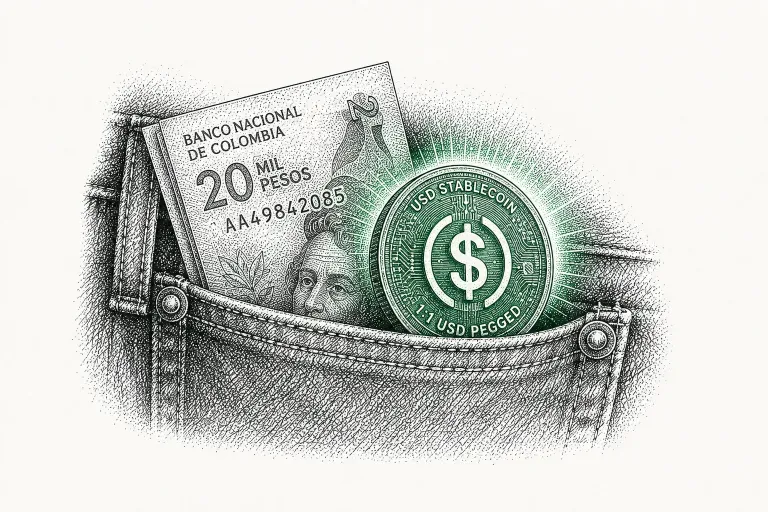
Step back from the market cap headlines for a second, because the real story lives closer to the ground. A gig worker in Manila getting paid in stablecoins doesn’t care about MiCA compliance frameworks or reserve audits. Caring about getting paid fast, keeping more of what she earns, and not losing a chunk of her income to a currency exchange desk matters far more. That’s the human layer underneath all these statistics, and it’s easy to lose sight of amid the market cap headlines and regulatory jargon. Small businesses in inflation-prone economies tell a similar story. Holding savings in a dollar-pegged token instead of a rapidly depreciating local currency isn’t a speculative bet for these households, it’s a survival strategy. Stablecoins Are Changing Global Finance most visibly in exactly these corners of the world, places traditional banking infrastructure has historically underserved or ignored outright. The technology doesn’t need to be perfect to be genuinely useful; it just needs to beat the alternative, and in a lot of places, that bar isn’t particularly high.
A Reality Check Worth Having
Not everything about this story is triumphant, and pretending otherwise would be dishonest. Stablecoins still account for just 1% of global payment flows, the same share reported back in 2023 and 2024, despite explosive growth in absolute dollar terms. Big number, small slice of a much bigger pie. International trade, institutional capital flows, and corporate treasury movements still run overwhelmingly through conventional financial infrastructure, and that’s not changing next quarter. There are macroeconomic wrinkles too. When households in a given country increasingly save and transact in dollar-pegged stablecoins instead of their local currency, demand for that domestic currency can weaken, complicating a central bank’s ability to manage interest rate policy. Emerging markets adopting stablecoins fastest may also be the ones least equipped to absorb those side effects. Worth remembering that Stablecoins Are Changing Global Finance doesn’t mean the transition is painless or evenly distributed. Somebody, somewhere, ends up managing the friction.
Where Ethereum Fits Into the Picture
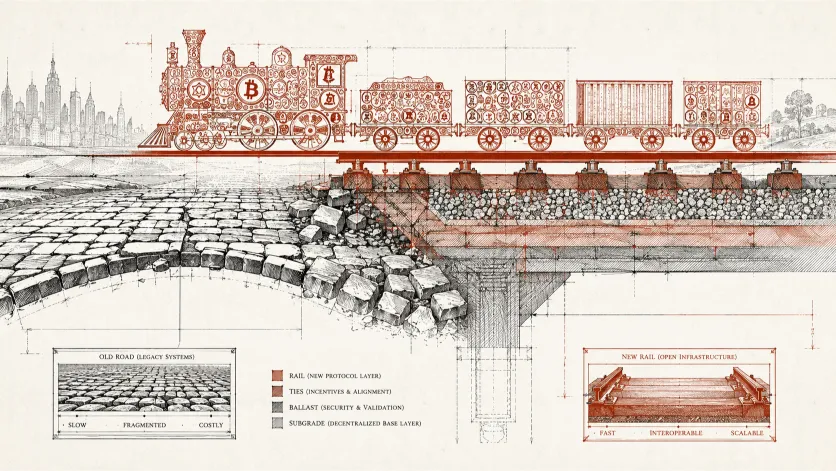
Most major stablecoins, including USDC and a huge share of USDT’s supply, live on Ethereum and its Layer 2 networks, leaning on the network’s security and its enormous existing developer ecosystem. That infrastructure choice matters more than it might seem at first glance. Programmable money needs a programmable settlement layer underneath it, and Ethereum’s smart contract capabilities let developers build lending markets, payment apps, and treasury tools directly on top of stablecoin liquidity without asking permission from anyone. Curious readers can explore the technical fundamentals over at Ethereum.org’s stablecoins overview, which breaks down how these tokens actually work under the hood. Layer 2 scaling has quietly made everyday stablecoin transactions cheap enough to matter for ordinary people, not just large institutions moving big sums. Sending five dollars used to cost more in fees than the transfer itself. That math has flipped, and it’s part of why adoption keeps climbing among regular users rather than staying confined to trading desks.
So, Where Does This Leave Us?
Nobody’s claiming stablecoins are about to replace the dollar, dethrone central banks, or make Visa irrelevant by next Tuesday. That would be silly. But the underlying trend is hard to dismiss, and the case that Stablecoins Are Changing Global Finance gets stronger every quarter new adoption data rolls in: faster settlement, lower fees, growing regulatory clarity, and real adoption in places where traditional banking has always been slow or expensive. Stablecoins Are Changing Global Finance the same way container ships quietly reshaped global trade decades ago, unglamorous infrastructure doing enormous, mostly invisible work. For more coverage on how blockchain technology is reshaping money movement, keep exploring the archives over at Ethpublic.com.