
Ever lost gas money at the worst possible moment? Not ETH itself, just the tiny sliver of ETH needed to pay for the transaction that would have moved your actual funds. Frustrating, dumb, and honestly kind of embarrassing for an ecosystem worth hundreds of billions of dollars. That single annoyance, multiplied across millions of users, is a big part of why account abstraction exists. Welcome to Account Abstraction Explained, the guide that finally makes sense of why your crypto wallet is about to get a whole lot smarter.
Okay, But What Even Is an Account on Ethereum?
Ethereum has always run on two flavors of accounts. First up: externally owned accounts, or EOAs, the standard wallet type most people use. An EOA is nothing more than a public-private key pair. Hold the key, control the funds, full stop. No flexibility, no extra logic, no safety net if you lose that key. Second: smart contract accounts, which run code and can enforce custom rules, but historically couldn’t initiate transactions on their own. Somebody with an EOA always had to kick things off. That rigid split created a lot of friction. Forget your seed phrase? Funds gone forever. Want a spending limit, multi-signature approval, or the ability to pay gas fees in USDC instead of ETH? Too bad, none of that was natively supported. Account abstraction closes that gap, and Account Abstraction Explained in the simplest terms means giving ordinary wallets the programmable superpowers that used to be locked away in smart contracts only.
The Two Paths: ERC-4337 and EIP-7702
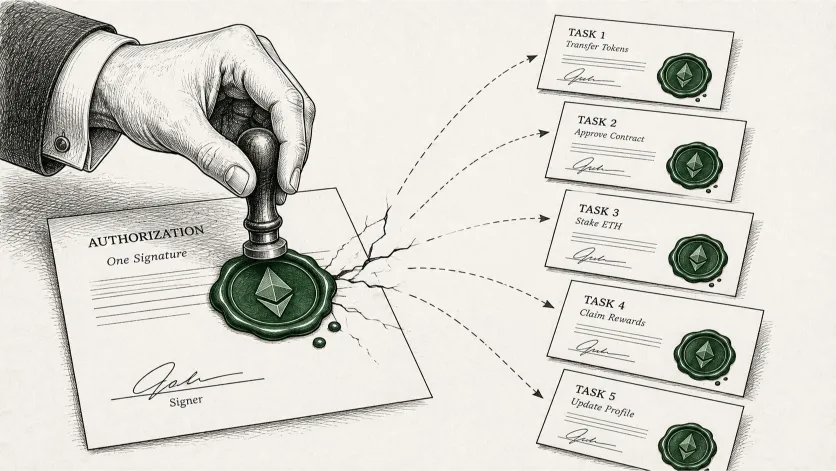
Here’s where things get genuinely interesting, and also a little confusing if nobody breaks it down clearly (hence, well, this article). Two major standards have driven Account Abstraction Explained conversations across developer forums for years now. ERC-4337 arrived first and took a clever workaround approach. Rather than changing Ethereum’s core protocol, ERC-4337 introduced a parallel transaction system running alongside the normal one. Users deploy brand-new smart contract wallets, and a network of “bundlers” and “paymasters” handles the plumbing behind the scenes. According to recent developer coverage, bundler infrastructure has become production-grade across major Layer 2 networks, with paymaster services handling millions of sponsored transactions daily. Solid system, proven at scale, but it requires deploying an entirely new wallet address. EIP-7702 took a different, arguably more elegant swing at the problem. Instead of forcing everyone onto new addresses, EIP-7702 upgrades existing EOAs so they can be controlled by smart contracts, letting your current wallet, same address, same private key, temporarily behave like a smart account. The mechanism works through a new transaction type that lets a standard wallet set its own smart contract code for the duration of a transaction or persistently across transactions. No migration headache required. That single design choice removed one of the biggest adoption barriers standing in the way of Account Abstraction Explained becoming a mainstream reality rather than a niche developer talking point.
So What Actually Changed for Regular Users?
Quite a lot, honestly, and most of it happened quietly in the background. EIP-7702 shipped as part of Ethereum’s Pectra upgrade back in May 2025, and adoption took off from there. Within the first week of Pectra’s launch, more than 11,000 EIP-7702 authorizations were recorded on mainnet, with adoption growing rapidly afterward. Major wallets jumped on board fast too. MetaMask, Coinbase Wallet, and Trust Wallet all rapidly adopted EIP-7702, meaning millions of people gained smart wallet features without ever installing anything new or learning a new interface. Practically, here’s what shows up in your day-to-day wallet experience. Batched transactions let you approve a token swap and execute it in one click instead of two separate signatures. Gas sponsorship means apps can cover your fees, or let you pay in stablecoins instead of hunting down ETH. Session keys grant limited, time-boxed permissions to a game or dApp so you’re not re-signing every single move. Social recovery options mean losing a device doesn’t necessarily mean losing your funds forever. None of this was possible under the old rigid EOA model, and all of it stems directly from the ideas at the core of Account Abstraction Explained.

Why Should Developers Actually Care?
Beyond the user experience wins, builders get a genuinely different design canvas to work with. Custom validation logic, spending caps, multi-factor approval flows, none of it needs to be bolted on with clunky third-party middleware anymore. Ethereum’s own developer guidance now recommends building against wallet capabilities instead of raw EOAs, designing frontends ready for batched calls, sponsored gas, session keys, and passkey-based recovery. That shift changes how teams architect apps from day one rather than retrofitting features later. There’s a security dimension worth flagging too, and it’s not all sunshine. Delegating an EOA’s execution to a smart contract introduces new attack surfaces if that contract is poorly designed. Replay attacks, gas griefing, and unauthorized transfers are real risks when critical transaction fields aren’t properly validated. Serious teams pair any Account Abstraction Explained implementation with rigorous audits before touching production funds, and skipping that step is asking for trouble.
What’s Coming Next?
Pectra and EIP-7702 were the opening chapter, not the finale, and anyone following Account Abstraction Explained conversations closely already knows more is coming. Ethereum’s roadmap points toward native, protocol-level account abstraction as the true endgame, where smart account behavior becomes the default rather than something users opt into. Upcoming network upgrades are expected to push this further, making the current hybrid setup feel like a stepping stone rather than a permanent architecture. Modular extension standards are also gaining traction, allowing wallets to plug in additional features, think custom recovery modules or specialized permission systems, without reinventing the wheel each time. Zoom out far enough and the trajectory becomes pretty clear. Ethereum spent its first decade proving that decentralized, programmable money could work at all. The next chapter is about making that programmable money feel as smooth and forgiving as the apps people already use every day, minus the custodial trade-offs. That’s the real promise buried underneath every technical explainer, including this one. Cross-chain orchestration is quietly becoming part of the story too. As users spread activity across multiple rollups and Layer 2 networks, the same account abstraction principles are being extended to route intents and permissions across chains, not just within a single network. It’s early days for that piece, and standards are still being hashed out, but the direction lines up with everything else discussed here: less friction, more automation, fewer moments where a user has to think about plumbing instead of just getting things done.

How Does This Compare to Traditional Fintech Apps?
Worth a quick detour here, because the comparison actually clarifies a lot. Banking apps and payment platforms have offered features like spending limits, biometric recovery, and one-tap approvals for years. Ethereum wallets, by contrast, spent a decade lagging behind on basic usability while still outperforming traditional finance on decentralization and censorship resistance. Account Abstraction Explained is essentially Ethereum’s attempt to close that usability gap without sacrificing the properties that made crypto valuable in the first place: self-custody, permissionless access, and no single company controlling the rails. That balancing act is harder than it sounds. A traditional bank can freeze an account, reverse a fraudulent charge, or reset a forgotten password because a central authority sits behind the whole system. Ethereum has no such authority by design, so every convenience feature needs to be rebuilt from cryptographic first principles rather than borrowed off the shelf. Social recovery, for instance, replaces “call customer support” with a network of trusted contacts or devices who can help restore access, no company hotline required. Clever solution, though it does shift responsibility onto users and app designers to get the details right.
A Few Honest Caveats
Not everything about this shift is frictionless, worth saying plainly. Wallet UX still varies wildly between providers, and “smart account” doesn’t automatically mean “foolproof account.” Users still need to understand what permissions they’re granting to a session key or a delegate contract, because blind trust in unfamiliar dApps remains exactly as risky as it always was. Education hasn’t fully caught up to the technology yet, and that gap matters more than marketing materials tend to admit. Also worth noting: not every wallet or dApp supports these standards yet, so the experience genuinely differs depending on what you’re using. Rollout has been fast, but it’s not universal, and treating account abstraction as some finished, uniformly deployed feature would be jumping the gun a bit.
The Bottom Line
Account Abstraction Explained boils down to one core idea: Ethereum wallets no longer have to be rigid, unforgiving key pairs with zero room for error. Through EIP-7702 and ERC-4337 working in tandem, ordinary users get batched transactions, sponsored gas, session keys, and recovery options that used to exist only in developer daydreams. Builders get a genuinely programmable canvas instead of duct-taped middleware. And the whole ecosystem inches closer to the kind of seamless experience that might actually convince the next wave of users to stick around. Anyone wanting the technical deep dive straight from the source should check out Ethereum.org’s account abstraction roadmap, and developers building production systems will want to review current EIP-7702 specification documents before shipping anything to mainnet.
For more explainers breaking down the protocol changes shaping Ethereum’s future, keep browsing the library over at Ethpublic.com.