
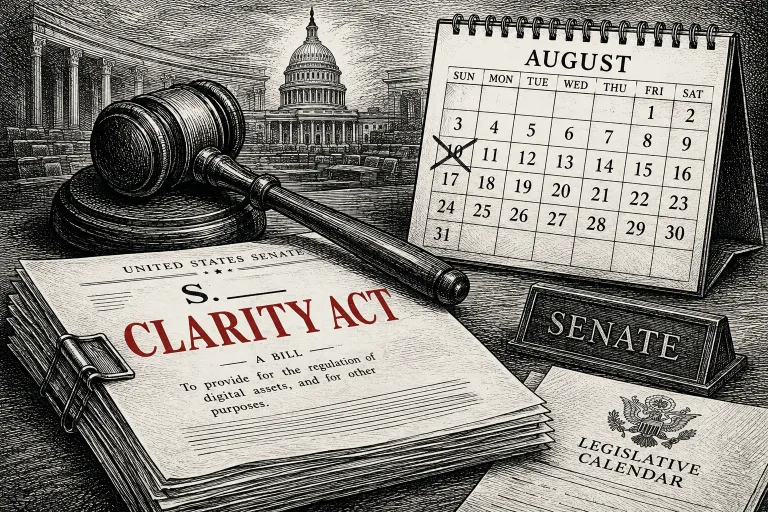
The CLARITY Act was supposed to be crypto’s big regulatory win of 2026. Instead, as of late July, the bill sits parked on the Senate calendar with no floor vote scheduled and a shrinking window to actually pass this year. Understanding where the CLARITY Act stands right now matters for anyone holding crypto, building on Ethereum, or just trying to figure out whether US regulation is finally catching up to the industry.
A Quick Recap of How the CLARITY Act Got Here
The Digital Asset Market CLARITY Act, formally H.R. 3633, cleared the House back on July 17, 2025, by a lopsided 294 to 134 vote, with every Republican and roughly 70 Democrats crossing the aisle to support it. That kind of bipartisan margin is rare for anything crypto-related, and it signaled real momentum heading into the Senate.
From there, the CLARITY Act split between two Senate committees. The Senate Agriculture Committee handled the portions touching CFTC oversight of digital commodities, advancing its version in January 2026. The Senate Banking Committee, chaired by Tim Scott, took the securities side of the bill and advanced its version on May 14, 2026, by a 15 to 9 vote, with Republicans joined by Democrats Ruben Gallego and Angela Alsobrooks.
Where the CLARITY Act Stands Today
As of late July 2026, the CLARITY Act has passed the House and cleared the Senate Banking Committee, but it has never reached the Senate floor. No cloture motion has been filed, and no vote date exists on the calendar. Senate Majority Leader John Thune has said publicly that the bill likely won’t get floor time before the chamber’s August recess begins around August 7 or 10, since the Senate is first working through federal nominations and a Russia sanctions bill tied to the late Senator Lindsey Graham.
White House crypto adviser Patrick Witt pushed back on that timeline, telling reporters the first week of August still had potential for a vote. Industry negotiators had circled August 10 specifically as the last realistic date for a 2026 passage, since missing that window pushes everything into the Senate’s September return, a much more compressed and politically distracted stretch heading into the midterm elections.
The Three Disputes Still Blocking the CLARITY Act
Passing the CLARITY Act through the Senate requires clearing the 60-vote filibuster threshold, meaning Republicans need seven to nine Democratic votes on top of their 53 seats. Three interlocking disputes have made that math difficult.
Stablecoin yields remain the thorniest fight. The earlier GENIUS Act bars stablecoin issuers from paying interest directly, but exchanges have found workarounds through affiliate rewards programs. The current CLARITY Act draft compromises by banning interest on idle balances while still allowing activity-linked rewards, a distinction banks argue is a loophole and crypto firms argue is a reasonable middle ground.
DeFi regulation is the second major sticking point. Lawmakers are still negotiating how much liability software developers should carry when their decentralized tools get misused by bad actors, balancing innovation protection against law enforcement’s need for real enforcement authority over illicit finance.
Ethics provisions round out the disputes, and this one carries real political weight given how visible Trump-affiliated crypto ventures have become since he returned to office. A July 22 draft reportedly includes new ethics language that Trump agreed to accept, restricting some of his personal crypto interactions. Democrats have called those restrictions insufficient, and bellwether senators like Kirsten Gillibrand, Alsobrooks, and Gallego are being watched closely for how they respond.

What Happens If the CLARITY Act Misses Its Window
A missed August deadline wouldn’t kill the CLARITY Act outright, but it would meaningfully damage its odds for 2026. Analysts note that pushing negotiations past the summer recess shifts the fight into a midterm election season, historically one of the hardest environments to move complex legislation through Congress. Failure this year would likely push final passage into 2027, an election-shadowed year in its own right.
In the meantime, the regulatory picture stays fragmented. A joint SEC-CFTC guidance document issued in March 2026 already classified 16 digital assets under existing frameworks, but that guidance can be reversed by a future administration without any congressional vote. Only a signed statute like the CLARITY Act would lock in lasting protection, which is exactly why the crypto industry has pushed so hard for passage rather than relying on administrative rulemaking alone.
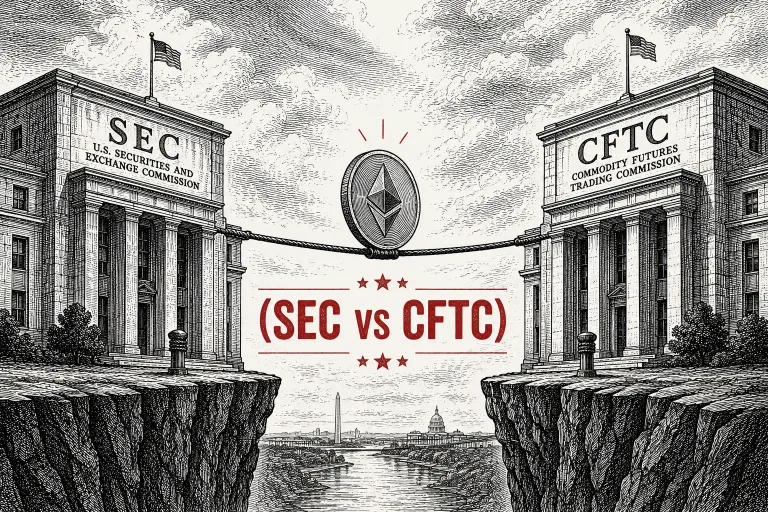
Real consequences are already showing up. Multiple crypto projects have reportedly shut down in 2026, citing the ongoing uncertainty around which agency, the SEC or the CFTC, actually has jurisdiction over their token or platform. Without a clear answer, firms can’t confidently plan custody arrangements or product roadmaps.
Why the CLARITY Act Matters for Everyday Holders
The total crypto market was valued near $2.28 trillion in July 2026, with roughly $680 billion sitting outside Bitcoin and stablecoins entirely, the exact category of assets the CLARITY Act would directly govern. Passage would determine which federal agency oversees the exchange holding someone’s ETH, what disclosure requirements apply, and what happens to customer funds if a platform fails.
For everyday holders, the CLARITY Act isn’t an abstract Washington fight. It’s the difference between a regulatory framework built for accountability and the current patchwork of enforcement actions and reversible guidance that’s defined the industry for years.
What to Watch Next
A few concrete signals will show whether the CLARITY Act is actually moving. Watch whether Thune files a cloture motion before the Senate leaves for recess, since no filing means no summer vote at all. Watch how the key Democratic senators respond to the newest ethics language. And watch whether Senate leadership decides to attach the CLARITY Act to a must-pass, year-end spending bill if the summer window closes entirely, a workaround several lobbyists have floated even though no senator has confirmed it publicly.
The CLARITY Act remains the most advanced piece of crypto market structure legislation in US history, further along than any previous attempt. Whether that progress translates into an actual law this year, or slips into the next Congress, likely comes down to whether the Senate can resolve stablecoins, DeFi liability, and ethics before the clock runs out.
For the full legislative text, the bill is available directly on Congress.gov, and CoinDesk has provided ongoing coverage of each committee milestone as the CLARITY Act has moved through the Senate. Investors tracking how the CLARITY Act could reshape exchange compliance and token classification can find more plain language breakdowns on ethpublic.com.